
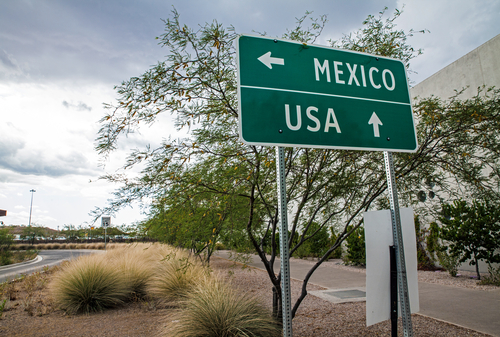
 Emergency Supplemental Appropriations for Humanitarian Assistance and Security at the Southern Border Act, 2019 (HR 3401) – This legislation provides $4.5 billion in emergency supplemental appropriations to federal departments and agencies for humanitarian assistance and security to respond to migrants attempting to enter the United States at the southern border for the rest of the fiscal year. This funding is available for appropriations for U.S. Customs and Border Protection, U.S. Immigration and Customs Enforcement, the Federal Emergency Management Agency, and the Department of Health and Human Services for the Administration for Children and Families. The bill also includes requirements and restrictions for how the funds may be used. It was introduced on June 21 by Rep. Nita Lowey (D-NY) and was signed into law by the president on July 1.
Northern Mariana Islands Long-Term Legal Residents Relief Act (HR 559) – This bill grants resident status to certain aliens who have resided continuously and lawfully in the Commonwealth of the Northern Mariana Islands since Nov. 28, 2009. The bill was introduced by Gregorio Sablan (D-Representative for the CNMI) on Jan. 25 and signed into law by the president on June 25.
A bill to amend the Federal Election Campaign Act of 1971 to clarify the obligation to report acts of foreign election influence and require implementation of compliance and reporting systems by presidential campaigns to detect and report such acts. (S 2242) – This bill was introduced on July 23 by Sen. Mark Warner (D-VA). It is in the first stage of the legislative process and will be considered by committee before possibly being sent to the Senate for a vote.
A bill to protect elections for public office by providing financial support and enhanced security for the infrastructure used to carry out such elections, and for other purposes (S 2238) – This bill was introduced on July 23 by Sen. Amy Klobuchar (D-MN). It is in the first stage of the legislative process and will be considered by committee before possibly being sent to the Senate for a vote.
DETER Act (S 1328) – Introduced by Sen. Richard Durbin (D-IL) on May 6, this bill is designed to block any foreign persons from entering the United States whose intent is to interfere in a United States election. The bill passed in the Senate on June 3 and is currently with the House for consideration.
Joint resolution providing for congressional disapproval of the proposed transfer and/or export of … certain defense articles and services (SJ 36, 37, 38) – Three joint resolutions were introduced by Rep. Bob Menendez (D-NJ) on June 5 designed to condemn the presidential administration for initiating the sale of arms to various countries, including the United Arab Emirates and the Kingdom of Saudi Arabia. Two of the three bills passed in both branches (one was not put up for vote in the Senate) in late June. However, all three were vetoed by the president on July 24. No override attempt is expected.
Protecting Affordable Mortgages for Veterans Act of 2019 (S 1749) – On July 25, the president signed a bill into law that enables veteran homebuyers to borrow above the current cap of $484,350 (for most counties) without a down payment. The legislation was introduced on June 5 by Sen. Kyrsten Sinema (D-AZ) and was passed by both houses in Congress within four days.
 National Flood Insurance Program Extension Act of 2019 (S 1693) – This bill reauthorizes the National Flood Insurance Program, which was set to expire on May 31, through June 14. The bill was introduced by Sen. John Kennedy (R-LA) on May 23, passed the Senate and the House in one week and was signed into law by the president on May 31.
 During its annual Worldwide Developers Conference (WWDC) on June 3, Apple introduced a lot of new technology. Here, we will have a look at iPhone iOS13 upgrades and the all-new Mac Pro.
 There is a lot of new technology being used to automate functions and save money in large corporations, but many small organizations are shut out of those advancements. This is largely because of the cost, training, knowledge and resources it requires to take advantage of such new technology.
 Many tax advisors are very cautious when it comes to claiming hobby losses – and some would argue overly so. This conservative view stems from the impression that the taxpayer usually loses when challenged by the IRS. While technically true that the odds aren’t in your favor of winning a challenge, the overall risk often works out in the taxpayer’s favor over the long run. Below we’ll look at why tax advisors should start from the assumption of taking the losses.
 With the Office of the U.S. Trade Representative announcing the increase of tariffs on imported Chinese goods from 10 percent to 25 percent on $200 billion worth of goods, and a directive from the executive branch to increase tariffs on an additional $300 billion in Chinese goods, how will publicly traded companies’ earnings be impacted?
 According to data from a U.S. Small Business Administration Office of Advocacy report from August 2018, businesses have varied longevity.
 Members of the college graduating class of 2017 owed an average of close to $30,000 each in student loan debt. Imagine starting out adult life with that kind of debt load?
 Summer is here and it’s time for getting out of town. However, you don’t want to set off on the open road without a plan. While there are an endless number of places to visit across the United States, here are a few road trips that are filled with natural parks, mountains and beaches, all of which are notably affordable, if not free.