
 For the most part, smartphones are your lifeline to the world. You connect with friends and family, shop and update your status on social media. However, you also store all your personal information on them and, these days, use them to do your banking. That’s why you need to take precautions. Here are a few critical things to do to make sure your information isn’t compromised.
Protect Your Smartphone
Your desktop and laptop are secure with anti-virus software and firewalls; the same should go for your phone. Here are five basic things you need to do ASAP: 1) Use a 4-digit PIN to lock your screen. If your phone is stolen, it’s harder for a thief to unlock it. Also, check to see if your phone has a feature that allows you to locate and remotely lock or erase data, should you lose it. This is called a “kill switch.” 2) Back up your data. Kind of basic, but it’s always important to be reminded. 3) Use location-based software to find your lost phone. 4) Install an antivirus app and software to erase the contents of a lost phone. And finally, 5) Update your apps to the latest versions and when downloading them, only choose those from publishers you trust.
Create a Strong Password
This is a no-brainer, but it’s imperative. Don’t use any part of your name or numbers from your birthday, or anything remotely personal. Make your password as complex and obscure as you can. Thieves can be smart. Don’t give them any chance to wreak havoc in your life.
Don’t Use Public Wi-Fi to Access Your Bank
Public Wi-Fi doesn’t have heightened levels of security, so make sure you use your phone’s data network or a secured Wi-Fi network when accessing sensitive information. If you don’t do this, you become vulnerable to hackers. You can never be too careful.
Don’t Save Usernames and Passwords in Your Browser
Sometimes, browsers give you the option to save your username and password. As convenient as this is, don’t do this. It could be easy for someone to gain direct access to your bank account if your phone is lost or stolen.
Don’t Follow Links
If you get an email or text from your bank, don’t click. It could be a phishing scam and could lead you to a “spoofed” website, which is a fake site created to look just like your bank’s official site. Always go to your bank’s site directly. Enter your bank’s web address into your phone and bookmark it. This way, you’ll avoid bogus sites and keep your money safe.
Log Out After Use
Even if you haven’t saved your credentials, it’s always important to do this when you’re finished banking. While this is convenient for the next time you do your banking, it’s leaving thieves an easy way in to steal all your assets should you leave your phone unattended, or worse, if it’s lost or stolen.
In a world that’s getting more and more digitized every day, shoring up your personal banking information just makes good sense. No one wants to put all that they’ve worked so hard for in jeopardy.
Sources
https://www.discover.com/online-banking/banking-topics/how-to-stay-safe-with-mobile-banking/
https://money.howstuffworks.com/personal-finance/online-banking/5-mobile-banking-security-tips.htm
https://en.wikipedia.org/wiki/Phishing
https://us.norton.com/internetsecurity-wifi-why-hackers-love-public-wifi.html
 As we progress through life, we find there are certain things we can control and others we cannot. However, even with the things we can’t control, we can exercise good judgement based on facts, due diligence, historical patterns and a risk/reward calculation.
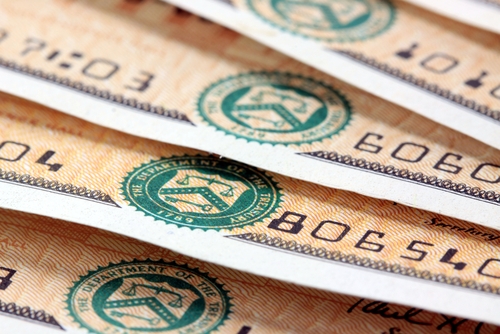 According to a Jan. 16 press release from the U.S. Department of the Treasury, within the first six months of 2020, the federal department will begin issuing a 20-year Treasury bond. This is the U.S. government’s attempt to maintain and support the federal government’s ability to borrow into the future. This action will also have an impact on the markets going forward, especially when it comes to the Federal Reserve and its monetary policy.
  Depreciation is an accounting process where the cost of an asset is accounted for and expensed over its useful life. It shows how the value of the asset decreases over time. Assets that can be depreciated include buildings, fixtures, production equipment, etc. For intangible assets, including many types of intellectual property, this process is called amortization. For commodities mined or harvested from the earth, such as lumber, crude oil or natural gas, this process is called depletion. Here are four common types of depreciation.
 Starting a side hustle today is easier than ever. Between the numerous websites that act as marketplaces and project jobs that can be found on the internet, almost anyone can turn a skill or hobby they have into something they can make money off. Many people who do this are just looking to make a little extra money on the side, but this side hustle can turn into something bigger – and this is where the tax and legal questions come in.
 Reauthorizing Security for Supreme Court Justices Act of 2019 (HR 4258) – This bill reauthorizes the Marshal of the Supreme Court and the Supreme Court Police to protect the Justices of the Supreme Court, their employees and official guests outside of the Supreme Court grounds. The legislation was sponsored by Rep. Greg Stanton (D-AZ). It was introduced on Sept. 9, 2019, and signed into law by the president on Nov. 27, 2019.
 Technology advances continue to reshape industries and businesses – and the accounting industry is no exception. So far, a lot of repetitive tasks are performed with the help of advanced hardware and software. Even for businesses that do not like change, many find themselves making adjustments due to a generation change in the workforce, marketing demands, regulations and client demand. In any case, technology offers strengths once a business adopts new solutions to the accounting processes.
 Believe it or not, it’s 2020. You’re not just starting a new year, you’re entering a new decade. With this in mind, you might want to make some resolutions that focus on your finances. According to Psychology Today,
  A rising tide might lift all boats, but the same cannot be said for the economy.
 When it comes to 2020 and energy prices, the world’s energy market will face many known and unknown variables. How and what types of events that will ultimately play out are unknown but, according to industry and government experts, there are some variables that are projected to lead to lower global prices overall.