
 Supporting Veterans in STEM Careers Act (S 153) – This bill encourages veterans to participate in STEM (science, technology, engineering and mathematics) fields in a variety of ways, including making veterans eligible for certain National Science Foundation (NSF) programs. The Act directs the Office of Science and Technology Policy to establish an interagency working group to improve veteran and military spouse representation in STEM fields, and authorizes funding for the Government Accountability Office to study 1) the academic success rates of student veterans pursuing an undergraduate degree in STEM and related fields; and 2) the barriers faced by such students in pursuing such degrees. This legislation was sponsored by Sen. Marco Rubio (D-FL) on Jan. 16, 2019. It was passed in the Senate in December, the House in January, and was signed into law by the president on Feb. 11.
Protecting America’s Food and Agriculture Act of 2019 (S 2107) – This legislation directs U.S. Customs and Border Protection to hire and train more agricultural inspectors at land, air and sea ports to prevent African swine fever and other foreign animal diseases from entering the United States. The legislation was sponsored by Sen. Gary Peters (D-MI). It was introduced on July 11, 2019, passed the Senate (October) and then House (February) and is currently waiting to be signed by the president.
Payment Integrity Information Act of 2019 (S 375) – This bipartisan bill is designed to reduce federal government waste in the form of overpayments, underpayments, payments made to ineligible recipients or payments that are not properly documented. It authorizes the Office of Management and Budget (OMB) to establish pilot programs to test potential accountability mechanisms for compliance requirements, such as updating a plan to improve the integrity and usage of Social Security death data. The Act was introduced on Feb. 7, 2019, by Sen. Thomas Carper (D-DE); it passed the Senate in July, the House in February and is currently waiting to be enacted.
Presidential Transition Enhancement Act of 2019 (S 394) – This law requires eligible presidential candidates (as of September of an election year) to develop and release transition team ethics plans, including how they will address their own conflicts of interest, prior to election day. It also is designed to focus a transitioning government on ongoing issues in the public interest during the changeover so that priorities are not shifted to solely address those of special interest lobbyists. The bipartisan bill, introduced by Sen. Ron Johnson (R-WI) on Feb.7, 2019, was passed by the Senate in August and the House in February. It is awaiting signature by the president.
United States-Mexico-Canada Agreement Implementation Act (HR 5340) – Introduced by Rep. Steny Hoyer (D-MD), this legislation represents the new trade agreement between the United States, Mexico and Canada to replace the North American Free Trade Agreement. This bill passed in both the House and Senate and was signed by the president on Jan. 29. Mexico has also signed the agreement. However, Canada is still in the process of getting it ratified through Parliamentary procedures.
PIRATE Act (HR 583) – This bill dramatically increases the fine for operating a “Pirate Radio” station, in which people set up their own stations outside the official Federal Communications Commission (FCC) system. The maximum fine increases from $19,639 to $100,000 per day, with a maximum total fine capped at $2 million, up from $147,290. The legislation was introduced by Rep. Paul Tonko (D-NY) in January 2019. It passed in the House in February 2019 and in Senate in January 2020. The bill was signed into law on Jan. 24.
 Pallone-Thune Telephone Robocall Abuse Criminal Enforcement and Deterrence Act (S 151) – Approximately 58.5 billion robocalls were made in the United States last year, a 22 percent increase over 2018. That works out to an average of 178.3 robocalls per person, per year. Perhaps it’s no wonder then that this law was passed by an overwhelming bipartisan majority in Congress. The legislation requires that phone companies ensure all calls come from real numbers, do not charge extra to block robocalls, and authorize government regulators to punish scammers with fines of up to $10,000 per call. This legislation was sponsored by Sen. John Thune (R-SD) and Frank Pallone Jr (D-NJ); it was signed into law by the president on Dec. 30, 2019.
 Reauthorizing Security for Supreme Court Justices Act of 2019 (HR 4258) – This bill reauthorizes the Marshal of the Supreme Court and the Supreme Court Police to protect the Justices of the Supreme Court, their employees and official guests outside of the Supreme Court grounds. The legislation was sponsored by Rep. Greg Stanton (D-AZ). It was introduced on Sept. 9, 2019, and signed into law by the president on Nov. 27, 2019.
 National POW/MIA Flag Act (S 693) – This bill amended title 36 of the United States Code to require that the POW/MIA flag be displayed on all days that the flag of the United States is displayed on certain federal properties. Previously, the POW/MIA flag was displayed only on Armed Forces Day, Memorial Day, Flag Day, Independence Day, National POW/MIA Recognition Day and Veterans Day. The legislation was introduced by Sen. Elizbeth Warren (D-MA) on March 7. It was passed in the Senate on May 2, passed in the House on Oct. 22 and signed into law by the president on Nov. 7.
 Terrorist and Foreign Fighter Travel Exercise Act of 2019 (HR 1590) – This bill promotes the identification and determent of terrorist activity from reaching the homeland, and enhances the United States government’s ability to respond to terrorism, including emerging threats. Specifically, the legislation requires the Department of Homeland Security to develop and conduct exercises related to foreign terrorism, including the National Incident Management System, National Response Plan, and other related plans and strategies. The legislation was introduced on March 7 by Rep. Michael Guest (R-MS). The president signed the bill into law on Oct. 9.
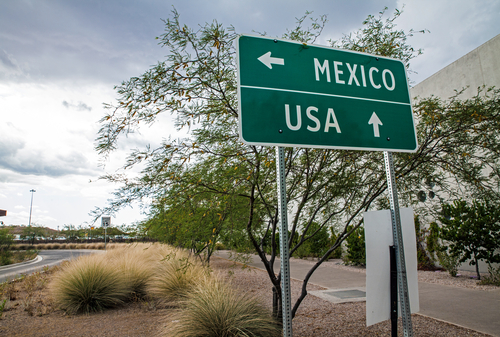 Emergency Supplemental Appropriations for Humanitarian Assistance and Security at the Southern Border Act, 2019 (HR 3401) – This legislation provides $4.5 billion in emergency supplemental appropriations to federal departments and agencies for humanitarian assistance and security to respond to migrants attempting to enter the United States at the southern border for the rest of the fiscal year. This funding is available for appropriations for U.S. Customs and Border Protection, U.S. Immigration and Customs Enforcement, the Federal Emergency Management Agency, and the Department of Health and Human Services for the Administration for Children and Families. The bill also includes requirements and restrictions for how the funds may be used. It was introduced on June 21 by Rep. Nita Lowey (D-NY) and was signed into law by the president on July 1.
 National Flood Insurance Program Extension Act of 2019 (S 1693) – This bill reauthorizes the National Flood Insurance Program, which was set to expire on May 31, through June 14. The bill was introduced by Sen. John Kennedy (R-LA) on May 23, passed the Senate and the House in one week and was signed into law by the president on May 31.
 Target Practice and Marksmanship Training Support Act (H.R. 1222 – The Pittman-Robertson Act, passed in 1937, imposes an excise tax on the sale of firearms, archery gear and ammunition. Those proceeds are used to fund hunter education programs, land acquisition and improvement of wildlife habitat. This new bill allocates a higher portion of these federal funds to cover the cost for construction and expansion of public target ranges. The act is designed to encourage states to develop additional shooting ranges for marksmanship training. It was introduced on Feb. 14 by Rep. Ron Kind (D-WI), passed in both the House and Senate and was signed into law by the president on May 10.