
 If you’re anxious about sending your children back to school, you’re not alone. In fact, a recent poll from ABC News/Ipsos showed that 45 percent of parents don’t want their kids in the classroom at all. But whether your kids are in school or learning at home, there’s still plenty of worry to go around. How do you cope? Here are a few suggestions from a variety of counselors and mental health professionals that can help.
Express Your Feelings
Noticing the anxiety that’s going on inside is half the battle – then let it out. “I would encourage parents to share this feeling with their partners or other family and friends,” says Michael Consuelos, MD, a senior medical advisor with the mental health management platform NeuroFlow in Philadelphia. Simply releasing what you’re feeling can often take the power of it.
Teach Your Kids How to Navigate
This starts with talking to your kids about what social distancing is, what it looks like, and how to wash their hands thoroughly. Fran Walfish, PsyD, MFT, and a family and relationship psychotherapist in Beverly Hills, Calif., suggests making up real-life situations and getting your kids to “think in advance about what they would say or do to protect themselves while preserving a friendship.” For instance, a friend of your son stands too close to him and asks to borrow a ruler. How should he react? Or your daughter is eating lunch and a friend reaches in and takes a few chips from her Doritos bag. What should she do? You can probably come up with many other scenarios that help your kids figure out the best options for keeping safe.
Have Honest Conversations
Kathleen Rivera, MD, a psychiatrist who specializes in children and adolescents at Nuvance Health in Danbury, Conn., strongly suggests talking with your kids about the situation, no matter how young they are, and asking them how they’re feeling about the changes in their school environment. What things about school do you miss the most? How is this new learning set-up working for you? What are things you don’t miss about school? Claudia Kohner, Ph.D., a licensed psychologist and creator of IntroDUCKtion to Very, Very Big Feelings app, says that if you have very young children, give them some colored pencils and a coloring book. Sit down with them and help them create a homemade book that describes the changes in their school setting and reflects their feelings that go along with it. Encouraging imaginative play with dolls and stuffed animals is also a great way to help your kids express what they’re going through.
Practice Self-Care
In these uncertain times, it’s more important than ever to be kind to yourself – and not judge yourself for failing to cross everything off your to-do list. “You don’t have to do it all,” says Elizabeth Derickson, MSW, LCSW, RPT, a therapist with online therapy provider Talkspace. This is her No. 1 piece of advice for parents who are dealing with back-to-school anxiety. She suggests setting up realistic expectations and acknowledging that there will be both good days and bad days, and allowing yourself “to learn from the bad days, move on and rock those good days.”
Embrace Change
In a few months, the landscape of your life might look radically different than it does today. That’s why being able to adapt to whatever new circumstance presents itself is key. According to Dr. Rivera, “Flexibility is the most important thing in this whole process.” Knowing you have every right to reverse your decisions is OK – and empowering.
Despite the seemingly never-ending stream of worries that inevitably crop up in our new abnormal, remember: the most constant thing in life is change. Things will get better.
Sources
https://www.realsimple.com/health/mind-mood/stress/manage-back-to-school-stress-coronavirus
https://www.ipsos.com/sites/default/files/ct/news/documents/2020-06/topline-abc-coronavirus-wave-12.pdf
 Digital marketing is not a new phenomenon. However, new realities imposed by the COVID-19 pandemic have highlighted the importance of digital marketing for businesses. Basically, digital marketing revolves around using digital channels to advertise. Such channels include mobile devices, search engines, social media, websites, email, and others to help reach consumers. The purpose is to create a relationship with potential online customers to influence their buying decisions.
 A bill to amend the Servicemembers Civil Relief Act to extend lease protections for servicemembers under stop movement orders in response to a local, national, or global emergency, and for other purposes (S 3637) – This bill extends the Servicemembers Civil Relief Act to protect service members who were previously issued orders to change duty stations but had those orders rescinded because of the pandemic. A stop movement order may leave them with a housing and/or car lease in two different locations. This extension allows families who are unable to relocate due to pandemic-related travel restrictions to be released without penalty from their leases. It is retroactive to March 1, 2020. The bill was introduced by Sen. Jon Tester (D-MT) on May 6. It was passed by the Senate in June, the House in July, and was signed by the President on Aug. 14.
 As the economic impact of COVID-19 lingers and an impending second wave is on everyone’s mind, Congress is already thinking of new legislation to stimulate the economy. One of the ideas on the top of the list is an expansion of the Research and Development (R&D) tax credit as part of the next COVID-19 relief bill.
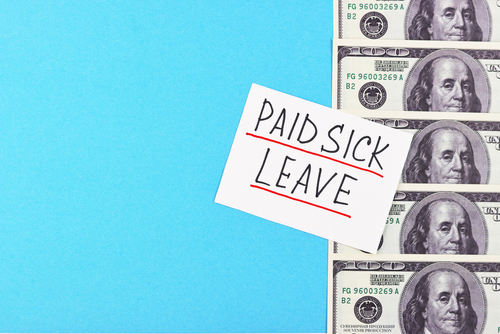 According to the United States Department of Labor’s Wage and Hour Division, the Families First Coronavirus Response Act addresses how select businesses must give their workers paid sick leave or expanded family and medical leave under permitted circumstances in light of COVID-19.
 The New York Fed Staff Nowcast predicts a negative 14.3 percent (-14.3 percent) growth of real GDP for Q2 of 2020 and a positive 13.2 percent growth of real GDP for Q3 of 2020. Clearly, the Fed is expecting a rebound in the second half of 2020.
 It’s been nearly half a year since Americans first became widely aware of the coronavirus contagion within the United States. While for a brief month it looked as if we had the virus in hand, since then it has spread wildly out of control in many areas.
 The impact of COVID-19 has caused many Americans to suffer hardships, one of which is struggling to make ends meet. But take heart; there are solutions. Here are a few areas in which creditors are working with people to alleviate some of the stress.